A Sunday Lunch Built Around What Needs Using
Plan a Sunday lunch around ingredients already at home, with a flexible menu that makes good use of them and keeps the shopping list focused.
The common mistake in planning a Sunday lunch is choosing a recipe first and checking the kitchen afterwards. That can leave you buying more food while a half-used cabbage, ripe pears or an open tub of yoghurt waits another week. A Sunday lunch built around what needs using reverses the order: start with ingredients already at home, then choose dishes that make them feel at home together.
Start with the kitchen
Begin with a brief, deliberate scan rather than an ambitious inventory. Check the fridge door and drawers, look at the fruit bowl, then inspect the pantry for opened packets and staples that could help turn a few ingredients into a meal. The aim is to notice what needs attention, not to use every item at once.
Group what you find by how it behaves. A bag of spinach that is wilting, ripe fruit, an opened carton of cream and cooked potatoes all have different needs. Some are best used soon; others can wait. This distinction stops “use it up” from becoming a reason to force an awkward ingredient into the menu.
It helps to separate ingredients into three roles:
- Centre: something substantial that can anchor the meal, such as a squash, a piece of fish, a joint of meat, or a tray of mushrooms.
- Support: vegetables, grains, bread, pulses, dairy or fruit that can become sides or a pudding.
- Helpers: onions, lemons, stock, herbs, mustard, flour or spices that add shape and flavour.
A single ingredient may fit more than one role. Leftover roast chicken could be the centre of a pie or a supporting ingredient in a vegetable soup. Decide what would make the best use of it in this particular meal, rather than treating its role as fixed.
Choose the anchor
The anchor is the ingredient that gives the lunch its direction. It need not be the most expensive or impressive item; it is simply the one that most needs a place in the meal, or the one that gives you a practical starting point. A large cauliflower, for instance, might suggest a roast-centred lunch, while ripe apples could lead you to plan pudding first.
Ask three questions before settling on it. Can it serve the number of people expected? Does it need a particular cooking method or attention at a particular time? And can the other ingredients support it without requiring a second shopping trip for an entirely new set of items?
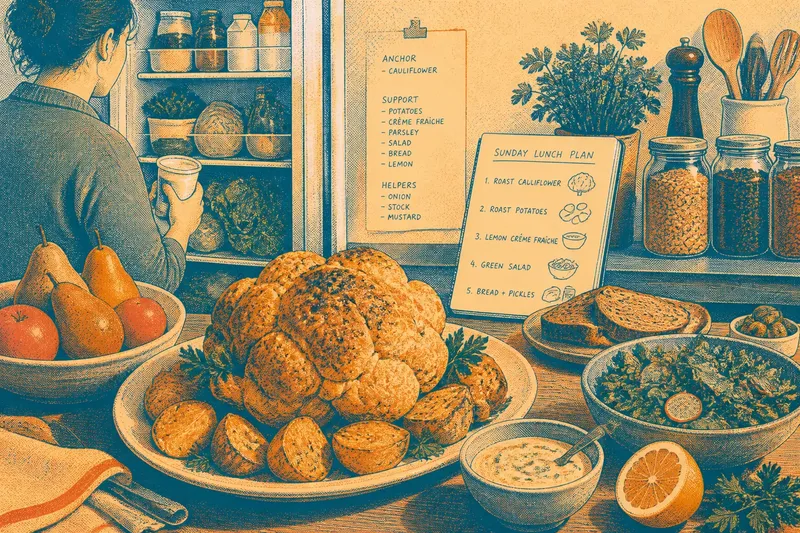
Say you find a cauliflower, a few potatoes, an open tub of crème fraîche, a lemon and some parsley. You might make the cauliflower the anchor, roast it whole, serve it with potatoes and a lemony crème fraîche sauce, then use the parsley in the sauce or as a finish. The observable result is a coherent meal built from what is already there, with any missing essentials easy to identify before you commit.
That is a menu decision, not a rule that every old ingredient belongs beside the anchor. If the parsley is still fresh, it can help; if it is limp or unpleasant, leave it out. A meal made from available food should still taste considered.
Build a balanced table
Once the anchor is clear, add contrast rather than a long list of dishes. Think about texture, temperature, flavour and effort. A soft main may benefit from a crisp salad; a rich dish may sit better with something sharp; a substantial centre may need only one vegetable and bread.
Use what is on hand to supply these contrasts. A jar of pickles can brighten a rich pie. Stale bread can become crumbs for a crisp topping or croutons for soup. A handful of nuts may add crunch to cooked greens, while yoghurt can temper a spicy roast vegetable dish. Treat such additions as options, not obligations: a spare ingredient is useful only when it improves the meal.
For a shared lunch, consider how people will serve themselves. A dish that holds well on the table, such as a grain salad or a tray of roasted vegetables, can reduce pressure on the main course. If the anchor needs to be carved or served hot, choose sides that can wait without losing their appeal.
One plain analogy helps: think of the menu like setting a table with a small number of useful objects. Each dish should have a reason to be there, just as each place setting needs a plate, cutlery and a glass rather than a pile of extras.
Plan the cooking rhythm
A menu can fit the ingredients and still be difficult if every dish needs the oven at once. Before you decide, sketch the cooking order in ordinary language: what can be prepared earlier, what needs the oven, what can cook on the hob, and what should be finished just before serving. This is especially useful when the kitchen has one oven or limited worktop space.
Favour dishes that share a cooking temperature or can be prepared in sequence. A tray of vegetables may roast while a pudding rests, and a dressing can be mixed ahead. If the main dish needs close attention, keep the sides simple. The point is not to choreograph every minute; it is to avoid making the meal depend on several last-minute tasks happening together.
Account for the condition of the ingredients, too. Use ripe fruit in a pudding or sauce rather than expecting it to wait until another meal. A sturdy root vegetable can usually be planned around with more flexibility. For foods with unclear storage or handling requirements, follow the product label, manufacturer guidance or relevant local food-safety advice.
Shape the shopping list
Only after the menu has taken shape should you write a shopping list. This makes the list a bridge between the ingredients at home and the meal you intend to serve, rather than a fresh plan that displaces them. Add missing essentials such as eggs, flour or a suitable cooking fat, and leave out ingredients that have a convenient substitute already in the cupboard.
Divide the list into items the meal depends on and optional additions. If the recipe needs lemons for a sauce, they may be essential; if you were considering an extra garnish, it can be dropped. This distinction makes it easier to adjust the menu when a shop is inconvenient or an item is unavailable.
Keep quantities flexible where the dish allows it. A vegetable soup, salad or fruit crumble can adapt to the amount you have; a baking recipe may rely more closely on its proportions. When the ingredient is central to a recipe’s structure, choose a recipe suited to what you have rather than assuming every dish can be freely altered.
Common planning questions?
What should I use first?
Prioritise ingredients that are ripe, already prepared or visibly losing quality, while checking that they remain suitable to eat. Then choose an anchor that can make those ingredients useful without crowding the meal.
Can Sunday lunch be planned without a roast?
Yes. A baked pasta dish, savoury tart, soup with bread or a large vegetable dish can serve as the centre of a shared meal. Choose a format that suits the ingredients and the cooking time you can comfortably manage.
What if I do not have enough for the expected guests?
Use a filling accompaniment, such as potatoes, beans, bread or grains, if it fits the menu and is already available. If the meal still feels short, adjust the plan before shopping rather than relying on an undersized centre to stretch further than it can.
How do I avoid an odd combination?
Connect ingredients through a shared flavour, cooking method or role at the table. If no sensible connection appears, save an item for another meal instead of adding it simply because it is there.
Leave room to adapt
A useful plan is firm about the meal’s shape but relaxed about details. Decide on the anchor, the essential shopping items and the broad cooking order; allow a side, garnish or pudding to change with what the kitchen offers. This makes the lunch easier to adjust if an ingredient is not in good condition or the day becomes busier than expected.
For a Sunday lunch built around what needs using, the most helpful habit is to notice one ingredient before deciding what to cook. That small change can turn an overlooked item into the beginning of a shared meal, while keeping the menu and shopping list grounded in what you actually have.