The Quiet Work of Salt in a Pot of Beans
Salt in a pot of beans works best when added gradually: learn when to season, what to taste for and how to avoid a flat or harsh finish.
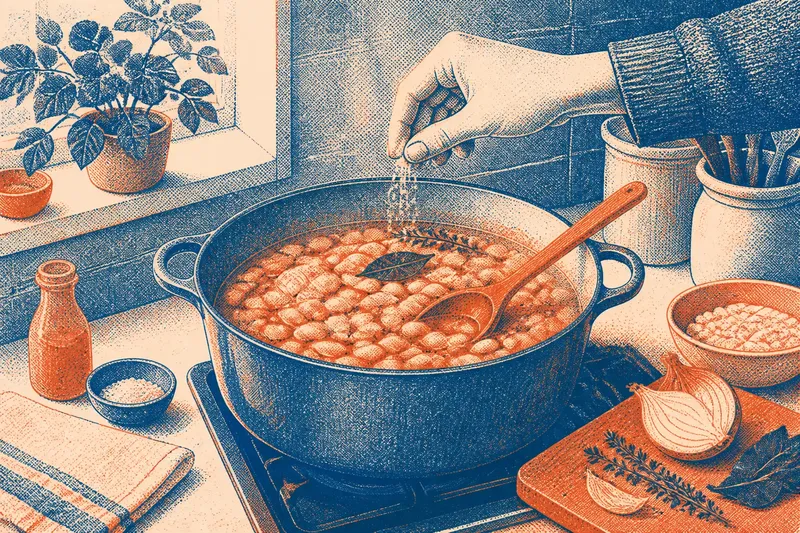
The common mistake with salt in a pot of beans is waiting until the very end, then trying to rescue a large, bland pot with a heavy shake. That can leave the broth sharply salty while the beans themselves still taste dull. Gradual seasoning gives salt time to meet the cooking liquid and beans, so each taste tells you what the pot needs next.
What salt changes
Salt does more than make food taste salty. In beans, it can bring out savoury, earthy and slightly sweet notes that are otherwise hard to pick out. A well-seasoned bean should taste distinctly like itself, not merely like salt.
As beans simmer, some of their flavour moves into the liquid. That broth becomes part of the dish, whether you serve the beans in it, reduce it into a sauce or drain them for another use. Seasoning only the beans at the end misses the chance to build flavour through the cooking liquid.
Salt also changes how you perceive other ingredients. Onion may seem sweeter, garlic more rounded, and a bay leaf or piece of kombu more evident once the pot is seasoned. It does not create those flavours; it helps bring their contrast into focus.
Before the simmer
Start by deciding what the beans are meant to become. A pot for a brothy supper can be seasoned to taste as it cooks. Beans destined for a salty sauce, smoked meat or a strongly seasoned salad need a lighter hand at first, because those later ingredients will contribute their own salt.
Use the recipe’s guidance as a starting point, not as a substitute for tasting. The amount of liquid, the beans’ age and the final dish all affect how the pot tastes. If you are cooking without a recipe, begin with a modest amount of salt dissolved in the cooking water. You can add more as the beans soften.
Salt the water after adding the beans and aromatics, then stir so it dissolves rather than sitting in a concentrated patch. If you have soaked the beans, drain and rinse them if that is your usual method, then use fresh cooking water. The important point for seasoning is to taste the liquid itself before it has reduced or picked up much flavour from the beans.
Choose a spoon that lets you sample a little broth without disturbing the pot. A small tasting spoon or clean teaspoon is useful; avoid tasting directly from the stirring spoon and returning it to the pot.
During the first simmer
Once the pot is gently simmering, leave it alone long enough for the salt to dissolve and the aromatics to begin lending flavour. Then taste a spoonful of broth. At this stage, ask whether it tastes distinctly seasoned or merely like warm water with a faint bean flavour.
If the broth is flat, add a small pinch of salt, stir, and let the pot simmer before tasting again. The pause matters: salt needs to disperse, and a hurried second pinch can overshoot the amount you intended. Keep the simmer gentle; a rolling boil can break beans and make it harder to judge the texture as well as the seasoning.
Do not judge the pot solely by its liquid. When a bean is soft enough to eat but not yet fully tender, taste one with a little broth. Beans can seem bland on their own while the liquid tastes seasoned, or the reverse. This paired taste gives a clearer picture of how the finished spoonful will land.
As tenderness develops
As the beans soften, they take on more of the surrounding flavour. The broth may also become more concentrated as water evaporates. Taste again when the beans are nearly tender, and consider whether the liquid has become saltier since your last sample.
If the flavour is still muted, add salt in small increments, stirring gently between additions. If the broth already tastes just right, stop even if the beans seem to need a little more time. Continue cooking for tenderness, then taste again before adding anything else. Texture and seasoning are related in the spoon, but they do not have to be adjusted at the same moment.
Imagine a pot of white beans intended for a simple lunch, with olive oil and lemon added after cooking. If the broth tastes faintly seasoned while the beans are still firm, a small addition followed by a pause may bring both into balance as they soften. If the broth tastes fully savoury near the end, leave the salt alone and wait to see how the olive oil and lemon change the final spoonful.
Think of seasoning like adding colour to a pale wash: a little can shift the whole surface, while a lot at once is difficult to undo. Unlike colour, salt is dissolved through the pot, so each addition should be followed by stirring and time to settle.
Before serving or storing
When the beans are tender, taste the beans and broth together once more. If you will serve them as they are, adjust the salt now, allowing a short simmer after each addition. If you plan to add salty ingredients, such as feta, olives, anchovies or cured meat, hold back and season after those are mixed in.
Acidity can change the impression of salt. Lemon juice or vinegar may make a pot taste brighter and more complete, but they do not remove salt. Add acid thoughtfully, then taste again; a dish can need both, either one, or neither.
If the broth is already too salty, avoid adding more seasoning and consider how the beans will be served. Unsalted beans or vegetables can dilute the saltiness if they suit the dish; extra plain liquid may help a brothy preparation, though it can thin the flavour. Do not count on adding water alone to correct a pot you intend to serve as a thick stew.
For beans being saved for another meal, keep their cooking liquid with them if it suits the intended use. The liquid carries flavour and helps the beans stay moist. Make a note of whether the pot tastes lightly or firmly seasoned, so you can account for it when using the beans later rather than seasoning the next dish as though they were plain.
How should you taste?
Should beans be salted before they soften?
You can season the cooking water before the beans are tender, then adjust as they cook. Begin modestly and taste the broth and a bean together as the texture changes.
Why does the broth taste saltier later?
Water can evaporate during simmering, concentrating what remains in the pot. Taste near the end as well as earlier, especially if the liquid has reduced noticeably.
Can you fix beans that are too salty?
First consider whether unsalted ingredients or extra plain liquid fit the dish; either can soften the overall impression. If the beans are meant to remain thick, adding water alone may leave them watery without making the flavour satisfying.
When should lemon or vinegar go in?
Add a little near serving, then taste the finished spoonful. Acid brightens flavour but does not replace salt or undo an overly salty pot.
A simple tasting rhythm
For a pot of beans, the useful routine is modest and repeatable: taste the broth after the simmer begins, taste broth and beans as they soften, then taste the finished dish with any planned additions. Each check answers a different question, so there is no need to keep sampling constantly.
Salt in a pot of beans is easiest to manage when each addition responds to a taste rather than a guess. Let the pot simmer between adjustments, and leave room for the ingredients you will add at the table. A final spoonful of bean with broth is the best guide to whether the seasoning is ready.