The Leftover Plan That Starts Too Late
A leftover plan works better before cooking ends: set aside a portion, name its next use and make food easier to remember and enjoy.
The common mistake with leftovers is waiting until the meal is over to decide what to do with them. By then, food may be mixed together, storage containers may be hard to find, and tomorrow’s meal has no clear shape; a small portion can become an unappealing mystery at the back of the fridge. A better leftover plan starts while the food is still being served.
When portions disappear
If you intend to keep some of a dish, serving directly from the cooking pot makes the amount hard to judge. Everyone may take a little more, or the last spoonfuls may be scraped out before anyone thinks to reserve them. The cause is not poor discipline so much as an unmarked boundary between tonight’s dinner and tomorrow’s ingredients.
Before serving, move the portion you want to keep into a clean container. This is different from saving whatever happens to remain: you are choosing an amount for a future use, rather than letting chance decide what is left. Keep the container out of the serving area so it does not get mixed back into the meal.
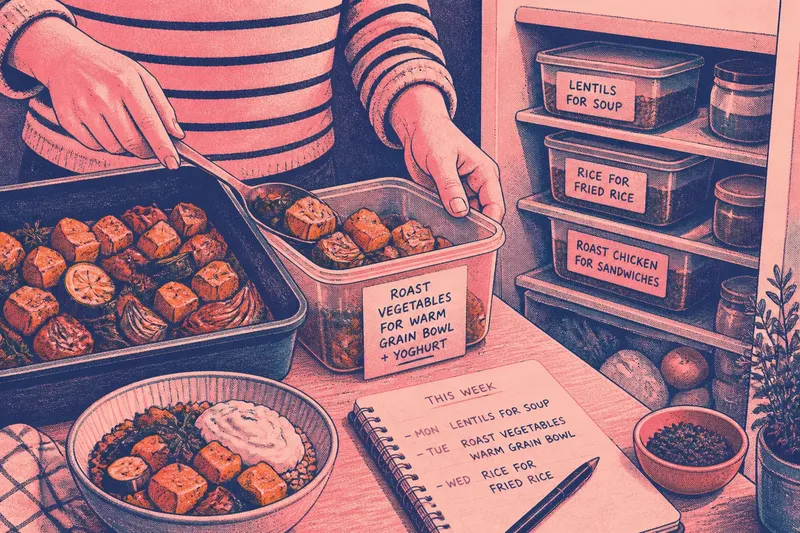
Say you are making a tray of roasted vegetables and have a lunch in mind for the next day. Before dinner, set aside a container of the vegetables and name their use: they will go into a warm grain bowl with a spoonful of yoghurt. When you later open the fridge, the container represents an unfinished meal rather than an anonymous side dish.
When food has no next use
A container labelled only “leftovers” asks you to make another decision later. If you do not know whether the food is meant to become lunch, a filling for a sandwich or part of another dinner, it can feel easier to cook something else. Naming a likely use gives the food a place in your meal plan without requiring a fixed recipe.
Write a short note on the container or put a reminder on a visible meal list. Useful wording is specific but flexible: “lentils for soup”, “rice for fried rice” or “roast vegetables for wraps”. The point is not to promise that exact dish; it is to make the ingredient’s most natural next role easy to recall.
Think of a reserved portion like a bookmark in a book. It does not decide what the next chapter must be, but it helps you return to the right place without starting from the beginning.
When storage is awkward
Food is less likely to be used if the container is difficult to stack, too large for the portion or hidden behind other items. A deep tub holding a shallow layer of sauce, for instance, may take up room and be easy to overlook. Choose a container that suits the amount and can sit where you are likely to see it.
Use a shallow, food-safe container for a portion that needs to cool, and avoid packing the fridge so tightly that air cannot circulate around stored food. Keep raw ingredients separate from ready-to-eat food, and use clean utensils when serving. Follow the food’s storage guidance and the appliance instructions; when safety is uncertain, seek advice from a qualified food-safety professional.
Put the portion in a visible, sensible place rather than moving it around whenever the fridge is tidied. A simple habit helps: after putting away the meal, add the named portion to the next day’s lunch or dinner plan. If that meal changes, the note can change too.
When reheating feels like a chore
Some leftovers are technically usable but not inviting in their original form. A plate of plain cooked rice may feel repetitive, while the same rice with egg, spring onions and a little soy sauce has a clearer appeal. Naming a next use before storing helps you notice what needs adding, rather than expecting the saved portion to become a complete meal on its own.
Consider the texture as well as the flavour. Keep crisp toppings, fresh herbs, dressings or crunchy bread separate when practical, so they can be added at serving rather than turning soft in storage. A note such as “soup base; add toast” or “pasta; finish with greens” can preserve the idea without requiring a full recipe.
When plans change
A planned lunch can disappear from the schedule, and the reserved food may remain untouched. This often happens because the plan was recorded in a place you do not check, or because the container has no clear connection to a particular meal. Put the note where meal decisions happen: on a fridge list, beside the weekly menu or in a household message everyone can see.
At the next meal-planning moment, scan those notes and either assign the food to a meal or remove the note if it has already been used. This is a brief reset, not a demand to eat every saved ingredient in a prescribed order. If the planned dish no longer appeals, choose another use that fits the food and your appetite.
Questions about leftover plans?
Should I reserve leftovers before serving?
Yes, if you already know you want a portion for another meal. Setting it aside before food is passed around makes the amount deliberate and keeps it separate from food that has been handled at the table.
What should I write on the container?
Record the main ingredient and a likely use, such as “roast chicken for sandwiches” or “beans for tomorrow’s soup”. Add a date if that helps your household keep track, and follow applicable storage guidance for the food.
What if I cannot think of a recipe?
Name a role instead: filling, topping, side, soup base or lunch component. That gives you a starting point without forcing you to choose a dish before you know what you will feel like eating.
How do I keep a portion from being forgotten?
Place it where it is visible without blocking other food, then add its intended use to a meal note you already consult. The reminder should take less effort to notice than the food takes to rediscover.
Make the plan small
A useful leftover plan does not need a calendar full of recipes. Choose one portion worth keeping, give it a clear container and name one plausible next use before the cooking session ends. If the idea changes later, the ingredient can still be redirected.
That small decision is the point at which leftovers stop being a problem to solve after dinner. With the next use already in view, a leftover plan becomes part of cooking itself: a modest promise to your future self, with enough room to change your mind.