Fresh Herbs or Dried: Choosing for the Dish
Fresh herbs or dried herbs suit different jobs. Choose by aroma, texture and cooking time to give soups, sauces and salads the finish each needs.
The common mistake with fresh herbs or dried herbs is swapping them by volume and expecting the same result. That can leave a delicate sauce grassy or a long-cooked stew muted, because drying changes a herb’s aroma and texture. Choose according to the job it must do in the dish, and the decision becomes easier.
Match the cooking time
Dried herbs are often useful when they have time to soften and mingle with other ingredients. Heat and moisture help release their flavour, so they suit soups, braises, tomato sauces and beans that simmer for a while. Add them early enough for their dry, sometimes woody texture to relax.
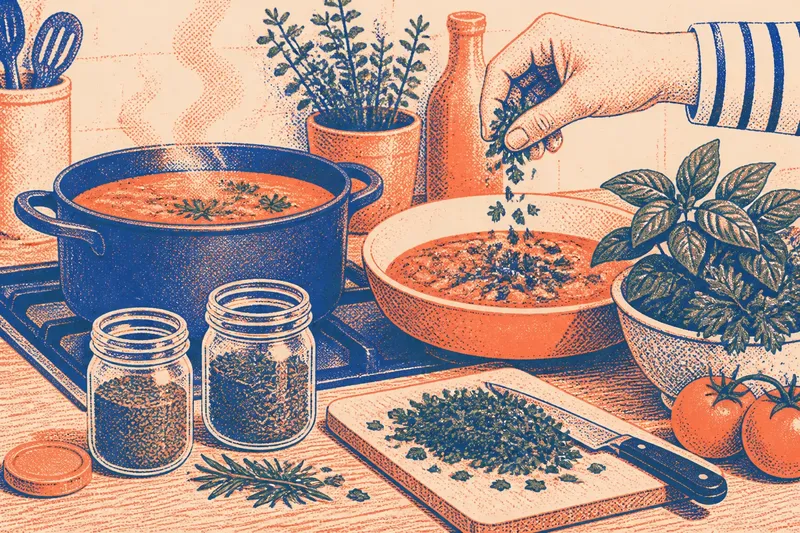
Fresh herbs are often at their best near the end of cooking, when their brighter aroma can remain distinct. Stir chopped parsley into a finished soup, or scatter basil over a warm tomato dish just before serving. Long cooking can dull these fresher notes, though sturdy herbs such as rosemary and thyme can withstand more heat than tender leaves.
Think of dried herbs as tea leaves steeping in a pot: they need time in warm liquid to give up their character. Fresh leaves are more like a final squeeze of lemon, bringing a clear note when the dish is ready.
Consider the herb itself
Some herbs hold up well when dried. Oregano, thyme, rosemary and sage often retain enough of their savoury character to be useful in cooked dishes. Their flavour can become more concentrated, so even a small amount may have a noticeable effect.
Other herbs are less convincing dried. Parsley and chives tend to lose much of the lively, green quality people seek from them, while coriander leaf can taste markedly different after drying. If the herb is meant to provide freshness, colour or a leafy finish, fresh is usually the more fitting choice.
There is no single rule for a herb’s best form: the intended role matters. Dried mint can work in a seasoning blend, while fresh mint may be more appealing in a yoghurt dressing. Dried basil can season a slowly cooked sauce, but fresh basil is often chosen for its fragrant leaves at the table.
Decide what texture should do
Herbs are not only flavour. Chopped fresh leaves add softness, colour and a little bite; dried leaves can disappear into a sauce or remain as small flakes. Consider whether the diner should notice the herb’s presence or simply taste its influence.
For a smooth soup, dried thyme can season the liquid without adding a leafy garnish. If you want visible green flecks, fresh parsley or chives can supply them just before serving. In a salad, fresh leaves may be part of the structure, while dried herbs are more likely to belong in the dressing.
Texture also affects preparation. Strip woody rosemary leaves from their stems and chop them finely so they do not dominate a bite. Tender parsley leaves can be roughly chopped for a rustic finish, or cut more finely when you want them spread evenly through a dish.
Follow the dish’s structure
Ask where the herb sits in the recipe: in the cooking base, inside a filling, in a sauce, or on top. Dried herbs make sense in a base that cooks for a long time, where their flavour can blend with oil, vegetables or stock. Fresh herbs can serve as a separate finishing layer, giving a dish contrast rather than making every element taste alike.
Say you are making lentil soup with dried thyme in the pot. Once the lentils are tender, add chopped fresh parsley to each bowl. The thyme gives the broth a savoury background, while the parsley supplies a distinct green note; neither has to do both jobs.
For a marinade or dressing that will not be heated, fresh herbs can provide an immediate aroma, while dried herbs may need time to hydrate in the liquid. If making the dressing ahead, let it rest, then taste it again before serving. The flavour may become more integrated as the herbs soften.
Adjust the amount carefully
Fresh and dried herbs are not equal spoon-for-spoon. Drying removes water and concentrates what remains, so the same volume of dried herb can have a stronger presence than chopped fresh leaves. The balance varies by herb, processing and storage.
When adapting a recipe, start with less dried herb than the recipe’s fresh amount and taste as the dish cooks. Dried herbs may season the cooking liquid in a recipe calling for fresh herbs, but they will not recreate a garnish’s colour or soft texture. Add fresh herbs gradually too: a large handful of a strong herb can quickly take over a mild dish.
Crush dried leaves lightly between your fingers before adding them if they are whole or coarse. This releases their aroma and helps you judge whether they still smell lively. If a jar has little scent, adding more may not restore the freshness the dish needs.
Choose the right form?
Can dried herbs replace fresh herbs?
Sometimes, especially in soups, sauces and other cooked dishes where herbs season the body of the food. They cannot fully replace fresh leaves when colour, a tender bite or a clean finishing aroma is central.
When should fresh herbs go into a pot?
For delicate herbs such as parsley, basil and chives, add them near the end or at the table so their aroma remains noticeable. Sturdier herbs can go in earlier, depending on cooking time and the flavour you want.
How can I tell if dried herbs are still useful?
Rub a little between your fingers and smell it. If the aroma is faint or dusty rather than recognisable, the herb may contribute little; choose a fresher option or let another ingredient carry that part of the dish.
Which form works better in a cold dressing?
Fresh herbs often suit a dressing intended to taste bright and leafy. Dried herbs can work too, particularly if they have time to soften in the oil or vinegar; taste before serving and adjust the balance.
Let availability guide you
Imagine you have a pot of tomato sauce to simmer, a jar of dried oregano with a clear herbal scent, and no fresh oregano. Add a little dried oregano early, let the sauce cook, then taste it; if the savoury note is present, leave it as it is, but if it is faint, add a small pinch and taste again. The sauce will carry oregano through its base, though it will not have the green leaves or fresh aroma of a garnish.
A recipe is a starting point, not a demand for a particular packet. If fresh thyme is unavailable, dried thyme can season a stew; if dried oregano smells stale, fresh oregano may suit a dressing or finish. Choose a form that fits both the dish and the state of the ingredient you have.
For a practical decision, check the cooking time, the herb’s aroma, the texture you want, the herb’s role, and whether the available form is fresh enough to contribute. If the dish simmers and needs blended savouriness, use a fragrant dried herb; if it needs visible leaves or a fresh finish, choose fresh herbs or leave the garnish out. Fresh herbs or dried herbs are different tools, and the useful choice is the one that gives the dish the aroma, texture and timing it needs.